
How to Eat like a Human
(Spoiler; I don’t know the answer and I’m not sure that anyone else does either!).


We share our planet with about 65,000 other species of vertebrate. 64,999 of them go about their daily lives, just being rabbits, deer, tigers, cod, peregrine falcons etc… instinctively eating for survival. When they are hungry, they look for food and then they eat it, having been furnished with/evolved the skills to make this possible, whether it’s nibbling grass or dive-bombing a vole. And then they do something else; have a nap maybe, mark out their territory, tend to some offspring, sit and gaze into the distance, etc…

Just one species has the capacity to make a meal of it (accidental pun) and we’ve got ourselves into a right pickle; we think we know so much, and yet it seems, still not enough to know what eating like a human really is.
The quest for deliciousness

How have we ended up here? Evolutionary theories suggest that when we started to cook, about 750 thousand years ago, enhanced nutrient availability led to brain development, changes to our jaw, skull and nasal anatomy, which in turn led to better developed taste, and the concept of deliciousness. This plays a huge part in our daily lives, and our relationship with food extends far beyond mere survival; it shapes human behaviour, culture, environment, health and longevity.
Omnivores and Processivores
There’s a staggering amount of choice when it comes to food. 85% of us are omnivores, extending this even further. We’re quite special in this regard as only 3% of animals are omnivorous (roughtly 2/3 of the remainder are carnivores, 1/3 herbivores REF 1).
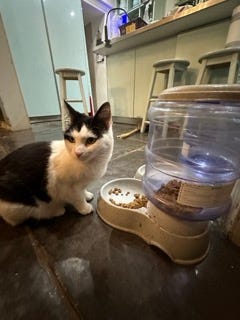
In contrast, Minty the cat eats the same thing, chicken IAMS pebbles, every single day. She is content; she self-regulates from her feeding tower, doesn’t forage for scraps from our plates and has maintained the exact same weight for 3 annual vet visits 😮.
If you’ve read Ultra-Processed People by Chris Van Tulleken (haven’t managed to finish it yet I’m afraid REF 2), you’ll know the term “processivore”. We are the only animals with the capacity to significantly alter our food, over and above the mechanical & chemical transformation of the digestive process: heating, grinding, drying, fermenting, salting are just a few examples. In the last 70 years or so, we’ve taken this to ridiculous extremes in our quest for convenience, hyper-palatability, flavour, and cheapness – aren’t we clever?
Why does it matter?
The right to be concerned about your diet or your health is yours and yours alone - It doesn’t have to matter at all. Some of us are content to rely on medication to offset the effects of what we eat. For me, though, I learned that eating well made me feel 20 years younger when I was about 40, and as I approach my 60s I want to maintain the status quo. Some of what’s coming to me will be genetically determined but if I can influence staving off the statins, blood pressure meds and metformin, so much the better. But everywhere I turn, conflicting voices whisper and if I, from the edge of the health/food arena, can’t navigate the maze, then how is anyone supposed to?
Here are some of the contradictory views I’ve encountered recently –you’ll get the point after a few lines and can skip the rest, but once I had started, I couldn’t stop!
THE DIATRIBE
Eat more fibre. Fibre is overrated, Innuits don’t need fibre. Plant-based is the only way. Vegetables are trying to kill you with lectins and oxylates. Only eat red meat and lettuce. Eat raw chicken to stimulate your immune system (yes, really). Eat fish. Avoid Fish it’s got mercury in. Eat meat substitutes. Avoid meat substitutes they’re full of additives. Don’t worry about the emulsifiers, your gut microbes won’t mind. Avoid sugar substitutes, because they might upset your gut microbes. Eat sugar substitutes because they don’t cause glucose spikes. Glucose spikes don’t matter. Unless they do matter. Don’t use seed oils, only the finest hand squeezed EVOO, unless it’s Zoe in which case do use seed oils. Don’t eat butter you’ll have a heart attack and get atherosclerosis. Don’t drink cow’s milk, it’s got lactose in. Drink oat milk. Don’t drink oat milk full of carbs. Drink soya milk, it’s got phytoestrogens. Don’t drink soya milk, it’s got phytoestrogens. Fruit it’s full of sugar so don’t have ,that unless it’s berries because those are superfoods. Never juice. Unless you’re on a juice diet. Never eat ultra processed foods – make everything from scratch. Collagen will change your life. Collagen peptides aren’t absorbed you’re wasting your time.
Avoid sugar. Don’t deny yourself because you should be able to have exactly whatever you want and be who you want to be. Avoid alcohol. Drink red wine. Sleep is crucial, eight hours a night or you’ll get Alzheimer’s. If you are a night owl don’t worry, it’s a sign of intelligence. Eat protein before bed for a good night’s sleep. Ensure you fast from 8 pm to allow your gut microbiota to do its job properly. Eat fermented foods but they contain histamines and salt so don’t. Avoid salt. Salt is important. Eat organic because of the pesticides. Eat lots of protein. Protein turns to fat and carbs. Eat more food to lose weight not less. Eat fewer calories to lose weight you eat too much. There’s no point exercising to lose weight. Exercise to burn calories. You can’t exercise yourself out of a big meal. watch your portion size . Calories don’t matter. Yes they do. No they don’t. Watch your macros instead. Don’t eat carbs. Do eat carbs. Don’t eat fat, you’ll get high cholesterol. Eat fat especially beef fat, it’s healthy. Never eat bread, it is the devil incarnate. Supermarket bread won’t kill you! Supplement, supplement, supplement. Don’t supplement they don’t work.
Why is there so little consensus?
The bottom line is, life is vast, cellular and genetic complexity is enormous, no matter how clever we think we are, we have got a long way to go. Health and nutrition research on subjects as variable as humans is tricky and hard to reproduce. A recent study found that more than 70% of researchers have tried and failed to reproduce another scientist’s experiments (REF 3). It is after all only 25 or so years since the human genome was decoded, and the gut microbiome even became a thing. We’re getting there but we still don’t fully understand the mechanisms behind type 2 diabetes, heart disease, MS, Crohn’s disease, ulcerative colitis or many cancers. Although we want answers right away, we’re a long way from that yet, and the search, meeting many dead ends along the way results in the chaos.
Which Guru do you do?
In recent years, instead of relying on our GPs for health advice, a new phenomenon has arisen. The epoch of the Health Guru is upon us, fuelled by the recent growth of both social media, and health and nutrition research. A mixture of doctors, scientists, nutritionists, all believe they have the answers we need for increased healthspan and longevity.


Tim Spector, the late Mosely, Rupy Aujila, Zoe, Glucose Goddess, Rhiannon Lambert, Rangan Chatterjee, Emily Leeming, Davinia Taylor, Chris van Tulleken, Zoe, Jason Fung are some of the most famous healthfluencers, but by no means is their advice universal. Everyone, myself included, has their own perspective: I found that kefir made me feel better, the Glucose Goddess found that regulating glucose helped her, Tim Spector had a mini stroke which led him to investigate his metabolic heath, Michael Mosely was a thin fat person on the verge of having diabetes, or others have become interested in and specialised in nutrition, and are sharing methods that work for them.
On t’interweb information spreads fast, and it’s easier than ever before to get your voice heard (even about 2000 people will glance at this post and no-one’s heard of me!). Spread of misinformation is also therefore easier – a little confidence, a personal belief, an airbrushed TikTok reel and there you go, you’re selling collagen to the masses. There is lots of very loud shouting out there, and everyone wants to be right. The vegans love their vegan lifestyle. The carnivore dieters love theirs. The 30 a week brigade are content; the keto lovers too. So who’s right?
There’s more than one way to skin a cat
One conclusion we can draw is that different approaches work for different people, i.e. it’s possible to improve your health via various routes. This isn’t that surprising when you consider the enormous variation in the human population. We are not lab-rat clones; we are genetically unique, with different diets, environments and histories; we react to interventions differently.
But how, then, do we know who to listen to? How can we tell if they’re physically like us, whether they’ve got our best interests at heart, if their advice is based on sound scientific evidence or if they’re more interested in lining their own pockets then our own well-being? Our choices are limited…
· Ignore all the noise and keep munching the hobnobs.
· Pick and choose bits of advice that you like the sound of.
· Try something and see if it works, and try something else if it doesn’t.
· Pick one “expert” and stick with them.
· Do your own hardcore research and see where that takes you
· Seek specialist advice from a registered doctor, nutritionist, dietician, etc…
I have to say the “pick and choose” option was disastrous for me; Tim Spector, in his diet myths book propounded that calorie counting is rubbish, and that you can’t lose weight by exercise. He’s an expert, I thought. So I stopped minding what I ate and stopped exercising. Then the Zoe programme pronounced that nuts and the calories in nuts don’t match up – you don’t absorb all the calories in nuts, which I interpreted as carte blanche to eat my bodyweight in cashews and pistachios each day. After I’d put on about 10 lbs it was time for a rethink.
I am now firmly between the “try something” and “do your own research” camps, which is working much better. For ME I should add – one thing I do agree with Zoe about is that this stuff is person-specific. These are the top things that work for the Gilmartins…
I Leave the biscuits and the crisps and the sweeties in the supermarket. If they are not in the house and we want something sweet, we have to make something instead. This means that it will immediately be a better choice. Homemade is always best. This works well if like me you are an excellent abstainer but a poor moderator (ie. One packet of hobnobs would last 15 mins tops).
I buy ingredients not meals. I have become adept at throwing things together in the time it would take to reheat a ready meal. Also immediately a better choice.
We drink more kombucha and less ( for me, no) booze.
Pulses, Rye bread, Seeds, apples are easy fibre wins.
I freeze rice and pasta and reheat for an additional resistant starch boost ( a type of fibre for your gut microbes).
We have at least one of the Ks everyday Kefir, Kombucha, Kimchi, ‘Kraut, Kvass, you choose – there’s something for everyone.
We move. Any exercise is better than no exercise. Even an exercise hater like me has learned to love Pilates.
On holiday, I keep it up. There’s nothing worse than putting on ½ a stone eating overly salty and sugar-laden tourist food.

· We keep busy. Hobbies are a fantastic distraction from boredom eating; I’ll whittle a spoon, decorate a stairwell, crochet a flower, or batch cook for the freezer.


I eat smaller portions than my husband and son. After all I weigh 5 stone less than they do.
Slow and steady wins the race, tomorrow is another day and there’s more than one way to skin a cat. If it doesn’t work out for us today, we can try again tomorrow.
At my age, there are a lot of ingrained food based behaviours going on, too much to untangle probably, but you can teach an old dog new tricks. It’s never too late to try a different approach to wellbeing.



What are your top tips for navigating the maze? – always looking for new ideas, I’d love to know what works for you and yours - or whether you follow the advice of one or many, and if so, whom?
REFS
Ultra Processed People Chris Van Tulleken
https://doi.org/10.1038/533452a
Excellent article, thank you. I'm very much in the pick and mix camp - I pick up bits and pieces from different places and we've made a lot of changes in recent years - but I'm wary of the advice of any one expert. The main thing I now try to do is, like you, buy ingredients rather than meals (any slim remaining interest in buying ready meals was firmly squashed by the recent BBC documentary on the ready meals industry). The kids and me still eat (top quality) meat but I'm trying to cut this to once or twice a week - so I've been on a quest to find vegetarian meals everyone likes (getting there slowly). I also grow a good amount of our own food in containers in our front yard - this makes it easy to eat a lot of salad and fresh herbs - and helps to make simple food taste great. I started making our own bread (sourdough), pizza and, occasionally pasta, 18 months ago and there has been no turning back. Also a top quality pressure cooker has been a revelation for cooking dried beans, which we now eat a lot of (the kids recently claimed our veggie chilli is as tasty as the meat one - yay!). We also do kefir every day, and kimchi sometimes when I get round to it (not as often as I should), but kombucha still remains a mystery. Are we any healthier? Who knows. But I'd say we enjoy our food more than ever, I find it more rewarding to cook more things from scratch, a bit less comes from the supermarket than it did, and we have less plastic packaging to throw away.
Hilary! Thanks for your reply. I cannot believe that microbiome score, it’s very good indeed… I’m too scared to have mine done in case despite my best endeavours i get a low score - I’ll behave like a spoilt child and just start eating crisps! I’m so sorry to hear you’ve been poorly, but hopefully your excellent quality microbiome is helping rather than hindering, and you’re on the road to recovery. I’m terrible with recipe books. I buy them, peruse them, semi remember recipes which I continue to adulterate each time I make them, and thereafter rarely get the books out at all!